Easy Drum - Real Music Drum
AVA GAMESMusic
4.738.00 Reviews
- Version
- 1.17.2
- Installs
- 1.00M
- Age Rating
- Everyone
Screenshots
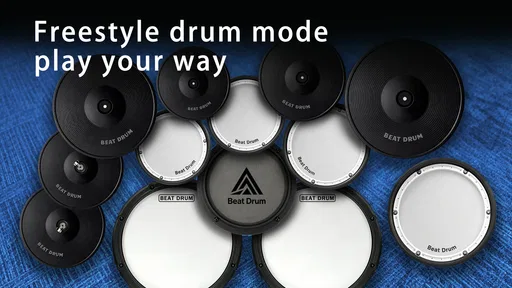
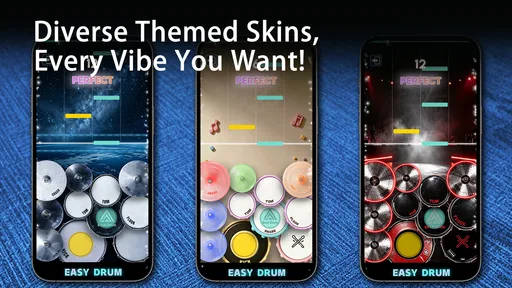
Our Review of Easy Drum - Real Music Drum
 Analysis by Appyee
Easy Drum - Real Music Drum is the kind of mobile game I open when I want a quick rhythm challenge rather than a full music-production session. It turns drum playing into a simple tap-based activity, with the appeal coming from timing, repetition, and the satisfaction of keeping up with a song. My overall impression is positive: it is approachable, lightweight in concept, and easy to understand, but its value depends heavily on whether you want casual rhythm play or a more complete drumming simulator.
That distinction matters. I would recommend it to someone who wants to practise musical timing during short breaks, introduce a child to basic rhythm ideas, or enjoy familiar-style track play without learning a complicated interface. I would not choose it as a replacement for a serious electronic drum app, a detailed rhythm-training tool, or a game built around deep progression. Its strength is immediacy, not complexity.
How the tapping experience works in everyday play
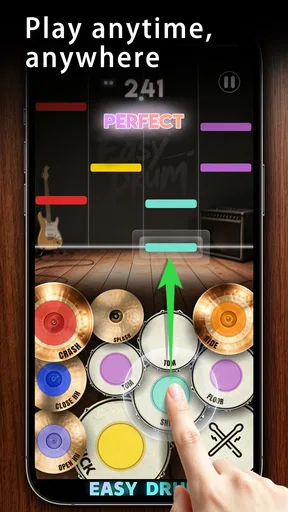
The first thing I noticed is how quickly Easy Drum communicates its purpose. There is no need to understand a large collection of menus before playing. The central activity is following the beat and responding at the right moment, which makes the game suitable for a short session while waiting for a bus, relaxing after work, or taking a break between tasks.
That simplicity is more useful than it may sound. Rhythm games often lose their appeal when the player spends too much time configuring controls or learning systems before reaching the music. Here, the basic idea is direct: listen, watch the play area, and tap with the track. The experience encourages concentration without demanding a long commitment from the player.
I found the game most enjoyable when I treated each track as a timing exercise rather than as a test of speed alone. The temptation is to tap as quickly as possible, especially when the music becomes busy. A better approach is to identify the repeating pulse first, then add attention to the individual hits. That small change makes the game feel more musical and usually produces a steadier result.
For beginners, this creates a gentle entry into rhythm gaming. You do not need previous drumming experience to understand what the game is asking. Someone who has never held drumsticks can still recognise the basic relationship between a beat and a timed input. The game therefore works well as an informal introduction to musical coordination, even though it should not be confused with formal drum instruction.
The music category also gives the experience a different mood from ordinary reflex games. Instead of reacting to random obstacles or abstract targets, I am responding to a pattern that has a sense of flow. When my timing is good, the session feels less like pressing buttons and more like joining the track. When I miss repeatedly, the problem is usually clear: I have stopped listening and started guessing.
That makes headphones particularly useful in a noisy environment, although I would still keep the volume comfortable. The game is easier to enjoy when the rhythm is distinct from surrounding sounds. In a quiet room, the audio and visual cues can work together; in a crowded place, the visual side becomes more important and mistakes feel less informative.
Why its accessibility is a real strength
The game is free to download, which removes the biggest barrier for curious players. It is also marked for Everyone, so it can fit a family-friendly collection more naturally than a game built around mature themes. I would still supervise younger players in the same way I would with any game involving optional purchases, but the basic concept is easy to explain and broadly approachable.
Its technical entry point is also modest. The listed minimum operating system is Android 7.0, so it is not aimed only at people with the newest phones. That can make a difference for families or users keeping an older device for casual entertainment. On a small screen, however, visual timing can feel less comfortable than on a larger display, especially during faster passages.
One practical tip is to begin with short sessions instead of trying to master everything immediately. Rhythm accuracy tends to fall when I keep playing after my attention has faded. A few focused attempts are more useful than a long, frustrated run. If a track feels difficult, I would first reduce distractions, hold the phone steadily, and listen for the recurring pulse before changing my tapping style.
Another useful habit is to avoid tapping ahead of the music. Mobile rhythm games can encourage anticipation because the next visual cue appears before the exact moment of input. Anticipating may work briefly, but it also creates a chain of early mistakes. I get better results by waiting for the beat to become clear, even if that feels slightly slower at first.
Where the game feels strongest
The strongest part of Easy Drum is the low friction between opening the app and playing. That makes it a good choice for people who do not want a long tutorial or a complicated collection of instruments. The game presents drumming as an immediate activity, so its appeal is easy to understand within a short time.
I also like the way it can serve different levels of attention. A casual player can simply follow the track and enjoy the music. A more focused player can treat the same session as a timing challenge, trying to reduce careless misses and build consistency. That flexibility gives the game more staying power than a purely decorative music app, even though it remains intentionally simple.
It is especially suitable for someone who enjoys rhythm games but wants a drum-focused theme. Compared with a general music game that may ask players to tap notes, slide across lanes, or follow several unrelated mechanics, this has a clearer identity. The drum concept gives each successful input a physical feeling, even though the interaction takes place on a touchscreen.
The game can also be useful in a social setting, but in a limited way. I can imagine passing the phone to a friend and letting them try a track without explaining a complex ruleset. That makes it a pleasant conversation starter or a small party distraction. It is not the sort of experience I would choose for a long multiplayer evening, but it works well as a quick challenge between people.
Its popularity suggests that this straightforward approach has found an audience. Easy Drum has passed one hundred thousand installs and holds an average rating of 4.6 from around 762 ratings. Those figures do not guarantee that every player will enjoy the same style, but they support my view that the simple rhythm format is connecting with many casual users.
The limitation that shapes the whole recommendation
The same simplicity that makes the game welcoming can also make it feel narrow. If I am looking for a realistic drum kit, detailed sound shaping, recording tools, or a structured lesson plan, this is not where I would stop. A dedicated drum simulator is better for exploring rudiments and hand coordination, while a music-learning app is better for organised practice and measurable improvement.
Easy Drum should therefore be judged as a music game rather than as a professional instrument. The tapping can improve awareness of pulse and reaction timing, but it does not teach posture, stick control, limb independence, or the physical dynamics of an acoustic kit. A player who wants to become a drummer may enjoy it as a supplement, but relying on it alone would leave important skills untouched.
There is also a natural ceiling to touchscreen input. The phone cannot reproduce the rebound, resistance, and spacing of real drum surfaces. Even if the timing challenge is enjoyable, the physical sensation remains different from playing pads or a kit. This is not a flaw unique to this title; it is the trade-off that makes mobile rhythm games convenient in the first place.
In-app purchases range from $0.99 to $5.99 per item. Since the game is free to start, I would approach those purchases carefully and decide first whether the core loop holds my attention. For a child using the device, I would review purchase controls before handing over the phone. The best way to enjoy this type of game is to treat optional spending as a choice, not as part of the basic requirement for trying it.
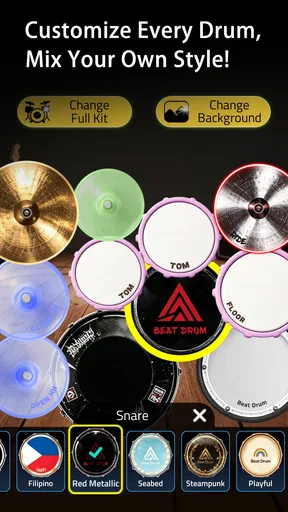
Another point to consider is replay motivation. Players who need a large progression system, extensive customisation, or a constant stream of new goals may find the experience less compelling over time. Easy Drum works best when the act of improving timing is enough motivation. If I need unlocks, rankings, or a long-term achievement structure to stay interested, I would probably prefer a more feature-heavy rhythm game.
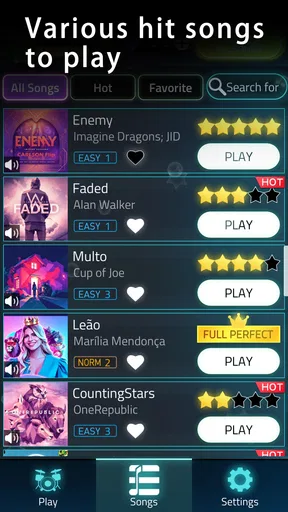
The current version is 1.12.0, which indicates that the app has received ongoing version changes, but I would not choose it solely because of a version number. What matters more is whether the available tracks and timing style match personal taste. A player who enjoys quick, focused music sessions will likely notice the convenience first; a player searching for a broad library and deep customisation will notice the boundaries sooner.
Who should download it
I think Easy Drum is a strong fit for casual players who enjoy music but do not want to study a complicated interface. It is also a sensible option for parents looking for an age-appropriate rhythm game that can introduce children to the idea of following a beat. The game gives young players a clear goal without requiring them to understand music notation or own an instrument.
It may also suit adults who want a small concentration exercise. I sometimes find that a short rhythm session is more refreshing than scrolling through social media because it asks me to listen and respond. The benefit is modest, but the activity is active rather than passive. A five-minute attempt can provide a clear reset between mentally demanding tasks.
For a novice musician, the most useful approach is to use it as a timing supplement. Play a track, notice where the beat feels unstable, then try again with less force and more attention to the pulse. Afterward, tapping a simple rhythm on a desk or practice pad can connect the game’s timing idea to a more physical exercise. That workflow gives the app a purpose beyond entertainment without pretending it replaces instruction.
I would skip it if my main goal were to compose, record, or perform. A digital audio workstation, virtual instrument, or dedicated drum-practice application would be a better investment of time. I would also skip it if I dislike repeated attempts at the same musical pattern. Rhythm games are built around refinement, and the satisfaction comes from gradually becoming more accurate rather than from discovering a new system in every session.
Compared with a conventional drum simulator, this game is easier to pick up but less informative about real playing technique. Compared with a broad rhythm game, it has a more focused drum identity but may offer less variety in the overall style of play. Compared with simply listening to music, it is more engaging because it asks for participation. Those are the trade-offs I would use when deciding where it belongs on a phone.
My final assessment
Easy Drum - Real Music Drum succeeds because it understands the value of a clear idea. It offers a friendly way to interact with music, rewards attention to timing, and avoids making the first session feel like homework. I appreciate that I can recommend it as a quick rhythm game without pretending it is a complete drumming course or a replacement for physical practice.
Its weaknesses are equally clear. The touchscreen cannot provide the feel of a real kit, the simple design may not satisfy players who need deep progression, and optional purchases deserve sensible control. Those limitations do not undermine the game; they define the audience that will enjoy it most.
For me, the verdict is straightforward: download it if you want a free, family-friendly music game for short sessions and you enjoy improving through repetition. Start with focused attempts, listen before tapping, and use it as a timing exercise rather than a substitute for learning drums. If that sounds like the kind of small, accessible challenge you want, AVA GAMES has made a convincing option. If you need realistic technique, recording, or an extensive long-term system, choose a specialised alternative instead.
Verdict
Strengths of Easy Drum - Real Music Drum
- Responsive pads make it easy to play basic beats on a phone.
- Useful for practicing timing, fills, and simple rhythm patterns.
- Quick to launch, making it convenient for short practice sessions.
- Touch controls are approachable for beginners with no drum experience.
- Can provide a fun way to experiment with different drum sounds.
Limitations of Easy Drum - Real Music Drum
- Small screens can make fast or complex patterns difficult to play accurately.
- Touch response may feel less natural than physical drum pads.
- Extended sessions can be tiring because of the required tapping posture.
- Sound quality depends heavily on your device’s speakers or headphones.
- Advanced drummers may find the available controls and features limited.
Similar Picks in This Category
View All
Tiles Hop Music & Ball Game
AMANOTES PTE. LTD.4.3

Magic Tiles 3™ - Piano Game
AMANOTES PTE. LTD.4.6

Real Piano
Bilkon3.7

Piano Game: Classic Music Song
Dream Tiles Piano Game Studio4.0

Smash Colors: Music Ball Rush
BADSNOWBALL HONGKONG LIMITED4.2

Piano Music Go-EDM Piano Games
Joy Journey Music Games4.5
Frequently Asked Questions
What is Easy Drum - Real Music Drum?
Easy Drum - Real Music Drum is a virtual drumming app that turns your Android or iOS device into a playable drum kit. It is designed for beginners, casual players, and anyone who wants to practice rhythms without owning physical drums. The interface generally places different drum and cymbal sounds on the screen, allowing you to tap, experiment with beats, and play along with music wherever you are.
Is Easy Drum - Real Music Drum suitable for beginners?
Yes, the app is mainly aimed at users who are new to drumming or want a simple way to explore percussion. The touch controls are easy to understand, and you can begin by tapping individual drums before attempting complete rhythms. However, it should be viewed as a practice and entertainment tool rather than a complete drum course, since it may not provide structured lessons, detailed technique guidance, or professional-level feedback.
Can I play along with songs using Easy Drum - Real Music Drum?
Easy Drum - Real Music Drum can be useful for playing along with music, depending on the version of the app and the features available on your device. You may be able to drum while listening to songs through another app or use any built-in music options provided by the developer. Keep in mind that audio playback, timing, and multitasking performance can vary between phones and tablets, especially on older devices.
Does Easy Drum - Real Music Drum work offline?
The basic drum-playing functions may work without a constant internet connection once the application has been installed, which makes it convenient for practicing while traveling or in places with limited connectivity. Nevertheless, internet access could still be required for downloading the app, displaying advertisements, restoring purchases, or accessing online content. Checking the store listing and the app’s permissions before downloading is recommended.
Is Easy Drum - Real Music Drum free to download and safe to use?
The application may be available as a free download, although free versions can include advertising, optional purchases, or limitations on certain features. Before installing it, download the app only from the official Google Play Store or Apple App Store and review the listed developer, ratings, permissions, and privacy information. As with any music app, headphone use is advisable at higher volume levels to protect your hearing.
Play our best games!


